Information for

Campus & Community
From Vision to Victory: African American Alumni Association Celebrates a Milestone Years in the Making
October 12, 2026



By Becky McCown, advising and accreditation specialist for Harding School of Theology
A Calling
Moses Arthur Hull spent his entire life in Memphis. He graduated from Manassas High School and then 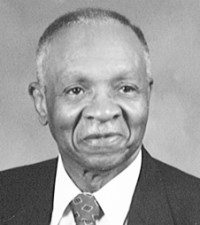 attended LeMoyne-Owen College. Like many young men in his community, he worked at the Firestone Tire and Rubber Plant in North Memphis. He was involved with his local Church of Christ.
One Sunday, Hull showed up to lead singing at a new church in town, and the preacher was not there. So, he stepped into the pulpit — and never left.
“In 1954, Brother Hull helped start the Firestone Church of Christ,” said Dr. Harold Redd, a longtime friend. “He felt a calling on his life to preach.”
The Firestone church met at Hull’s workplace, in the Rubber Workers’ Union Hall. Although Hull did not have any formal ministry training, he was passionate about serving the Lord’s church, and their numbers grew.
“He was a bi-vocational preacher,” shared Redd. “He made his living by working another job. He did a lot for the church with what he had.”
Eventually, the Firestone church purchased a building on Springdale Street, and became known as the Springdale Church of Christ. Hull continued preaching there until 1990, when Dr. Harold Redd succeeded him in the pulpit. In 1993, the Springdale Church bought a building on Union Avenue, and they became known as the Midtown Church of Christ. They later planted another church, Raleigh Springs Church of Christ. Brother Hull stayed on as minister emeritus, serving and encouraging both congregations.
A few years after being in the new location, Redd had an idea.
“We wanted to honor Brother Hull’s years of service to the church, and we wanted to honor him with something more than just a plaque. The last thing a preacher needs is another plaque,” said Redd.
Redd recognized that in their community, they needed to train the next generation of preachers. “It’s hard nowadays to do what Brother Hull did, to work full time and preach,” Redd shared. “We need more full-time preachers who can dedicate themselves to the work of the church.”
At the same time, Redd did not want the next generation of preachers to incur debt for their training. “If a young minister already has some debt from undergrad, and you just add debt to that, that's crazy as far as we're concerned. You can’t send these guys out to make a preacher's salary with all that debt.”
The church at Midtown decided to create an endowment at Harding School of Theology in honor of Brother Hull to give full scholarships to young Black men who want to be preachers.
“We knew we had to raise a lot of money for that to happen,” said Redd. “So, we pledged in 1997 to raise $100,000 in three years, and with the help of many churches in Memphis and the surrounding area, we ended up hitting that goal in only two years. That was the birth of the M.A. Hull Endowed Scholarship.”
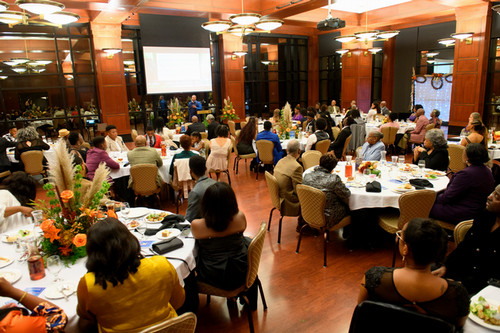
After the initial pledge in 1997, the church held a fundraising banquet each year on Brother Hull’s birthday to continue to raise money for future ministers.
“Brother Hull was so excited when we started the scholarship. He was the greatest supporter of it,” said Redd. “He worked with us, in fact, for every stage of its creation.”
Brother Hull served as minister emeritus at Midtown until he died in December 2010. He was 96 years old. He had the rare experience of spending the entire duration of his ministry — 37 years — at the same congregation.
The Right Path
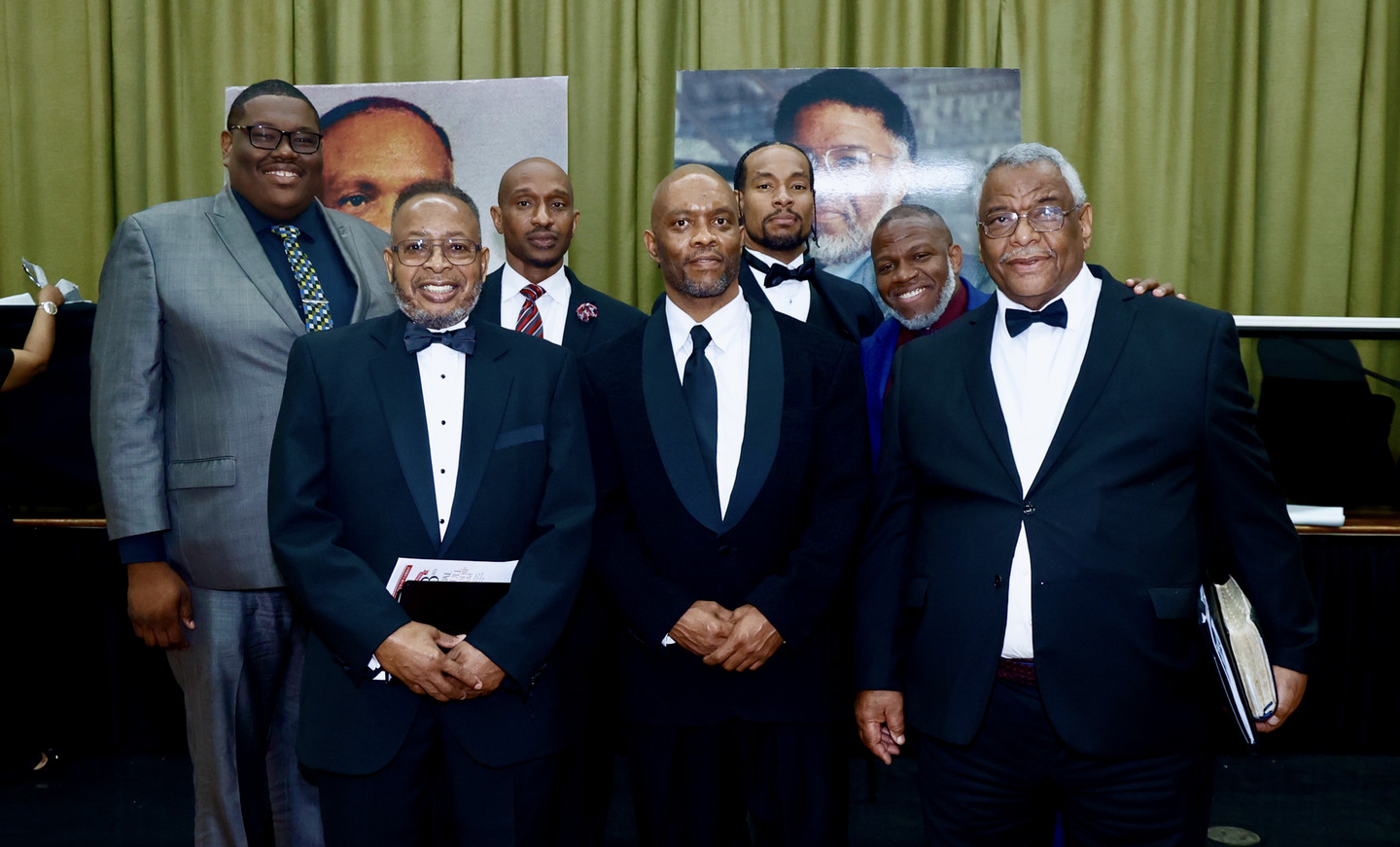
The M.A. Hull Endowed Scholarship has been awarded to 12 different men since 2001. Five of these men have graduated from HST with Master of Divinity degrees, and two of them have graduated with Doctor of Ministry degrees.
Brian Ayers was in the scholarship program from 2003-2010. He graduated with an M.Div. in 2010, just a few months before Brother Hull passed away.
When asked how he found out about the M.A. Hull scholarship, Ayers shared, “I obeyed the gospel at Martin Street Church of Christ in Water Valley, Mississippi, where Brother Herbert Goodman was preaching. He invited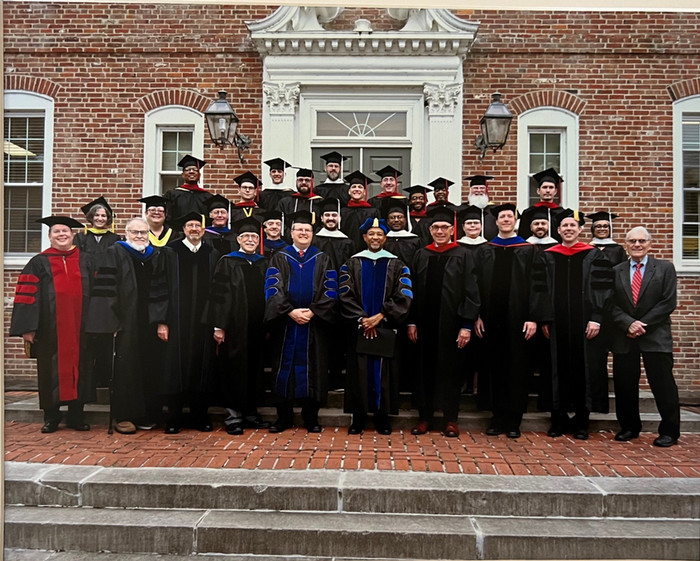 Brother Redd down for a gospel meeting. I met him at the gospel meeting, and it changed my life. I learned more Bible in one week than I had learned my whole life, and it just lit a fire in me. The following year, I had grown and gotten to a point where I had wanted to go into ministry, and Brother Redd invited me to Memphis to talk. He encouraged me to move to Memphis and start the scholarship program.”
Jerrard Davis came to HST from Columbus, Ohio. A Fisk University graduate, he started taking classes at HST in Fall 2003. “Although I initially intended to pursue a Master of Divinity to teach philosophy, God redirected my focus,” Davis said. “I met Brother Redd through an old friend. Through my relationship with him, HST, and the M.A. Hull Scholarship, God equipped me for ministry.”
Like Ayers, Davis finished his M.Div. in 2010, and worked at Midtown throughout the time he was in school. After graduation, he went to preach at the Spencer Church of Christ in Spencer, Oklahoma. He eventually came back to HST and graduated with a Doctor of Ministry in 2026.
Hamilton Archibald, who grew up at Midtown, was the first “homegrown” Hull Scholar. He remembered his former preacher Brother Hull: “I can still hear his voice. He had this really deep, resonating voice.” Archibald, nicknamed “Ham,” earned a bachelor’s degree in Bible from Harding, and then came back to Memphis to join the Hull scholarship program and attend HST. He graduated with an M.Div. in 2014.
Jason Manning, who also graduated with an M.Div. in 2014, grew up in the same congregation in Columbus, Ohio, as Jerrard Davis. He was planning to go to graduate school somewhere else, and Jerrard called him and told him he should come to Memphis instead. “He said it would be a better situation because of Brother Redd, the M.A. Hull scholarship program, and the Midtown church,” Manning said. “So I came down one weekend in 2004 and preached that Sunday at Midtown. And as they say, ‘the rest is history.’”
Femi Osibin graduated from Lipscomb University, and had met Tanil Buchanan, who worked at Lipscomb, during his time there. Tanil had grown up at Midtown, and her mother and grandmother still worshiped there. “Tanil saw a little bit of ability and talent in me,” said Osibin. “Because I was going to preach, she introduced me to Redd. He told me about the scholarship. And the year I graduated, I decided to come on down to Memphis.” He graduated with an M.Div. in 2017.
Gerald Taylor, Sr., grew up in Memphis, so he knew Redd. “When I went to school out in Texas and began preaching in Texas and Oklahoma, I would come back home and meet up with him. So we stayed in touch,” shared Taylor. “After I shared some church growth strategies I developed in Oklahoma with him, he asked if I would be willing to develop them further through doctoral studies. I gladly accepted, and I completed my D.Min. at HST in 2024.”
Taylor’s son, Gerald Taylor Jr., was actually the first student to receive the M.A. Hull Scholarship in 2001. He left HST after his first year and sought other educational opportunities. He passed away in 2014. “I like to think I finished what my son started,” Taylor shared.
“I do believe those of us who were interested in ministry came to HST looking to be put on the right path, and this scholarship put us on the right path,” said Brian Ayers. “And I'm thankful for that. I always will be.”
A Bridge
Once the Hull Scholarship Program gained momentum and had a small cohort of students, they started meeting weekly at Midtown on Tuesday mornings with Brother Redd. All the Hull Scholars agreed they would not have made it through HST without this special scholarship program that included both classes at HST and mentoring with Redd.
Redd shared, “I don't want to come across as saying the classroom is less or more important than ministry experience. I want it to come across as two different approaches, and both are needed. They’re both very 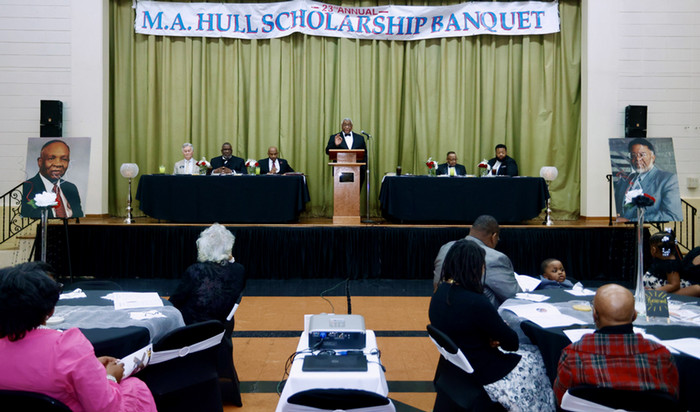 important, so this scholarship program design gives people the best of both worlds.”
“I loved all my teachers, good people, but we came from two different worlds,” said Osibin. “The school showed me how to study and introduced me to academia. But to prepare us for ministry in our context, we had Redd, who kind of bridged that for us. He could see where we were at, and he could help us get to where we needed to be.”
Manning shared, “The mentorship piece with Brother Redd was probably the most beneficial part of the program — just having a more seasoned minister that had experience with life. You know, there's nothing we encountered in school that he hadn't already encountered or understood, you know, from a ministry perspective or from a graduate school perspective. It was good to have somebody you could call and say, ‘Have you ever heard of this?’ And the answer was always, ‘Yes.’”
“Midtown was a safe space,” Osibin added. “We could just go through life together. Our group was a place where we could talk, be transparent and still be understood and accepted and not condemned and judged. We all go through stuff in life. In that group, we could say, ‘Hey, we're your brothers, and we’re all gonna do this together.’ We knew that we had each other's back.”
Practical Ministry Skills
The M.A. Hull Scholarship Program requires its students to be actively involved in ministry at Midtown Church of Christ or other local churches during their time at HST. This allows them to learn practical ministry skills and receive mentoring from Redd and other local preachers.
“Brother Redd had us do a lot of things, you know, with the church,” said Manning. "If there was a funeral here, we'd be involved. If there was a wedding, we'd be involved. If there was a gospel meeting, we'd be involved. He threw us into as much ministry as he could. So we got a chance to see what will and won't work, and how it will or how it won't work.”
During their time as Hull Scholars, Archibald and Manning were heavily involved in youth ministry at the Earle Church of Christ in Earle, Arkansas. Every Thursday night, members from Midtown would get in buses and drive over to Earle with Little Caesars pizzas and spend time with the kids there.
“Those were real kids that needed to hear the gospel, and that was where the rubber met the road in tangible ministry through the scholarship program,” shared Archibald. “A lot of the kids we worked with were kids that other people had written off and wouldn’t give them a second chance. That’s the spirit of love and redemption that has been the subtext of the M.A. Hull Scholars program.”
Interested in the M.A. Hull Scholarship or enrolling at HST? Contact Chris Jackson at cjackso2@harding.edu or visit harding.edu/hst for more information.