Information for
Academics
Honoring a Legacy of Faith
October 14, 2026



By Laura Miller, student writer
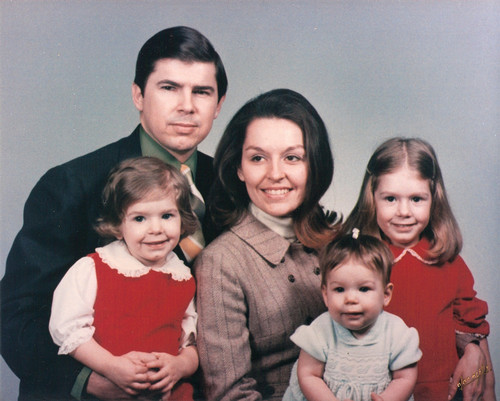
More than 50 years after her father’s death, Susan Houston discovered a piece of his story she had never known existed. While sorting through old family documents and pictures, she stumbled upon a letter from Harding president, Dr. Clifton Ganus Jr. dated Nov. 11, 1971. The letter revealed that multiple students donated blood for her father, Al Lynds, following his diagnosis of leukemia that year.
“My jaw literally dropped. And my eyes just teared up,” Houston said as she described stumbling across the letter.
Houston was three years old when her father died, so she only has a few memories of him. However, when she found the letter, she was invited into another piece of his life, one that connects him to Harding, a place he called home.
Lynds and his wife, Kay Edwards, both attended the University, with Lynds later graduating. After leaving Harding, the couple settled in Memphis, Tennessee, where they had three daughters. After establishing themselves in their new city, Lynds was diagnosed with an acute, incurable form of leukemia. For decades, the family did not know the impactful role Harding students played in the final weeks of his life. Yet, this changed once Houston opened the letter from President Ganus.
While Lynds was receiving treatment, Ganus wrote to him describing the extraordinary blood donation response from Harding students. Following an announcement of Lynds’ need for blood, 42 students traveled to Little Rock, and 30 to 40 pints of blood were ultimately credited to him. But for Houston, the most remarkable part wasn’t that a substantial amount of blood was donated to her father, but that students stepped in to donate to someone unfamiliar to them.
“I found it extraordinary,” Houston said. “It was a compassionate response by the school and the students.”
More than five decades later, the opportunity to serve persists. Harding continues to host blood drives on campus, allowing students to give to people they have never met. For one of the coordinators of these drives, Dr. Kyle Thompson, the willingness to serve is fundamental to why the University continues to facilitate them.
“We believe being a good neighbor means looking for ways to serve others,” Thompson said. “Even when we may never know who benefits from our sacrifice.”
The same idea is reflected in the students who continue to donate and work the on-campus blood drives today. Senior nursing student Brooks Tomlinson, views blood donation as a connection point to the kind of care he hopes to provide one day as a nurse.
“I decided to donate blood because I felt it was a way that I can serve the people I will be taking care of once I graduate as a nurse,” Tomlinson said.
For Tomlinson, blood donation is more than just a medical process; rather, it is a tangible expression of Harding’s greater mission and the Christian faith.
“Through the donation of blood, we are running toward brokenness and taking part in God’s healing,” Tomlinson said. “Blood donation is an easy way to help carry someone’s burdens.”
In 1971, Harding students responded to the need of a Harding alumnus. Today, students continue to serve people across the state and become part of their stories.
“Students may never know the person who receives their donation, but they know they’ve done something tangible to help a neighbor, a family or someone going through a difficult moment,” Thompson said.
For Houston, the impact of this kind of servanthood has lasted for decades, and Harding will continue the tradition. During this academic year, Harding’s campus will reflect a spirit of service through three blood drives. The first will take place Sept. 8-10 in the McInteer rotunda; the second will be Nov. 17-19 at the Blood Mobile outside the McInteer Bible and World Missions Center and Pryor-England Science Center; and the final one will be Feb. 9-11 in the McInteer rotunda.
More than 50 years later, Harding students still have the opportunity to give a gift that could become a meaningful part of someone else’s story.